Why 360 virtual tours work
The main benefit of a 360 virtual tour is simple: people can understand a place before they commit time, money, travel, or a meeting. Instead of asking them to imagine a space from a few photos, you let them explore it.
That matters for real estate buyers, hotel guests, parents comparing campuses, museum visitors, event planners, tourists, investors, and remote stakeholders. A good tour answers practical questions quickly: What does the space look like? How do the rooms connect? What is included? Is it worth visiting or booking?
For a business, the tour is not just a visual feature. It becomes a reusable sales, marketing, support, and trust-building asset.
Key benefits of 360 virtual tours
A well-planned tour should support a business outcome, not only look impressive.
More trust before contact
Visitors can inspect the real space, which reduces uncertainty and makes enquiries feel more confident.
Better-qualified leads
People who enquire after exploring a tour usually understand the space better than people who only saw static photos.
Longer engagement
Interactive exploration gives visitors more reason to stay on the page and learn about the location.
Remote access
Buyers, guests, students, teams, and stakeholders can review the space without being physically present.
Reusable sales asset
The same tour can support websites, proposals, QR codes, emails, ads, listings, and presentations.
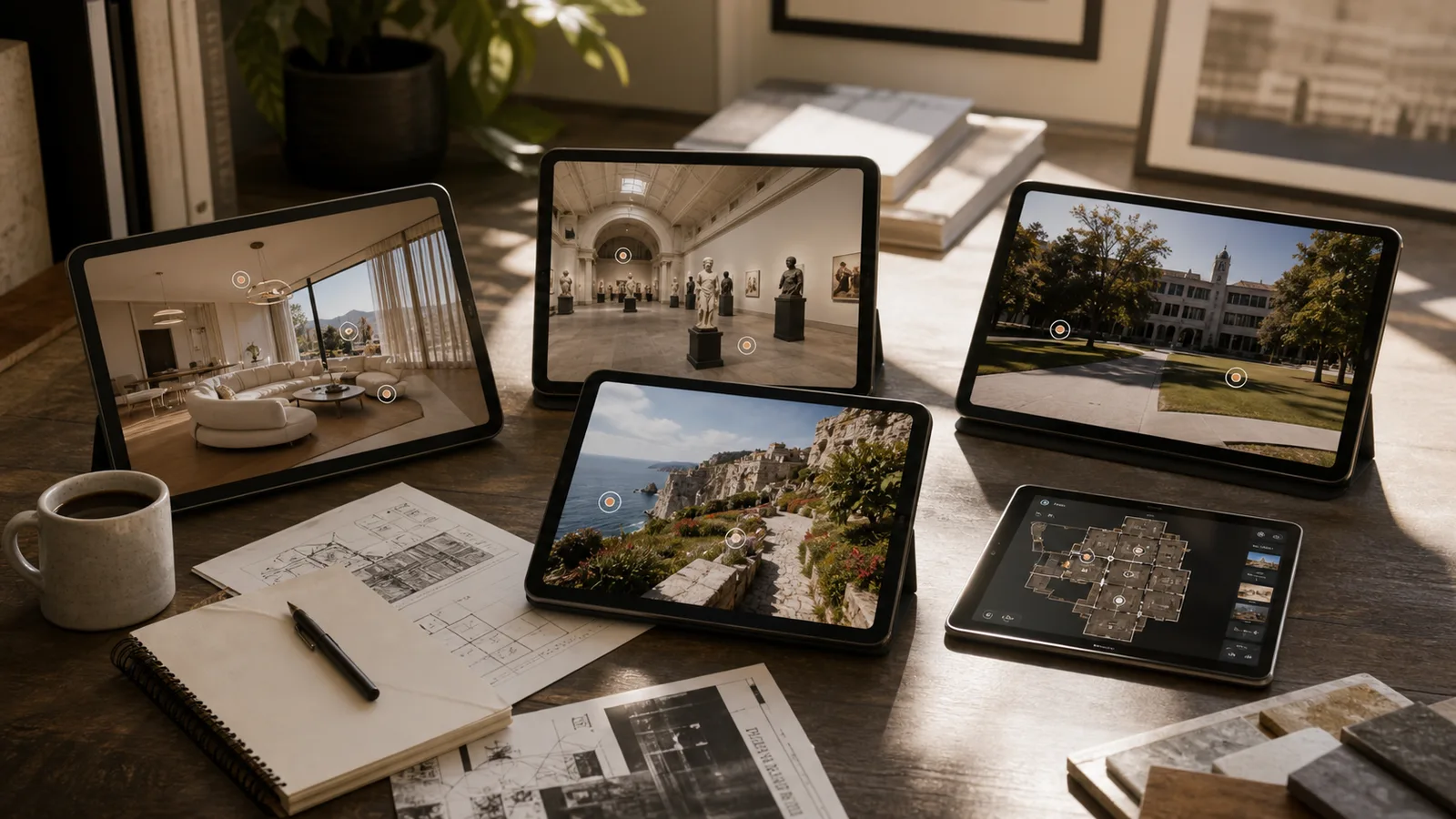
Benefits by industry
The same 360 tour format can serve different business goals depending on the audience.
| Industry | Main benefit | Best call to action |
|---|---|---|
| Real estate | Help buyers or renters understand layout, room flow, finishes, light, and space before booking a visit. | Schedule a viewing or request property details |
| Hotels and venues | Show rooms, suites, halls, views, lobbies, and event layouts before a booking decision. | Check availability or plan an event |
| Museums and heritage | Support remote access, school programs, exhibition previews, donor engagement, and visitor planning. | Plan a visit or explore the exhibition |
| Campuses and schools | Show classrooms, labs, libraries, studios, sports spaces, and student life to parents or applicants. | Book a tour or contact admissions |
| Tourism and destinations | Turn curiosity into itinerary planning with explorable viewpoints, trails, facilities, and seasonal content. | Plan a trip or request a guide |
Conversion benefits for service and sales teams
A tour works harder when it is connected to a clear next step.
- Fewer repetitive questions because visitors can inspect the space themselves.
- More informed calls because prospects already understand layout, style, and available areas.
- Easier remote sales conversations because the team can guide clients through the same tour.
- Better proposal support because the tour can be reused in emails, decks, and booking flows.
- Clearer analytics when tour clicks, hotspot usage, form submissions, and booking links are tracked.
A 360 tour should guide visitors toward a decision.
Hotspots, floor plans, labels, narration, booking links, lead forms, and analytics can turn a visual walkthrough into a business asset.
When a 360 virtual tour is worth it
A 360 tour is usually worth it when the physical space strongly affects the buying decision. If people need to understand layout, scale, ambience, access, facilities, rooms, views, or movement through a place, a tour can help.
It is especially useful when your audience is remote, busy, comparing options, planning a visit, or making a higher-value decision. In those cases, a tour can reduce hesitation and make the next conversation more productive.
If the space is simple and the decision is low-stakes, normal photography may be enough. The right question is not Should every business have a 360 tour? It is Will this specific audience make a better decision if they can explore the space?
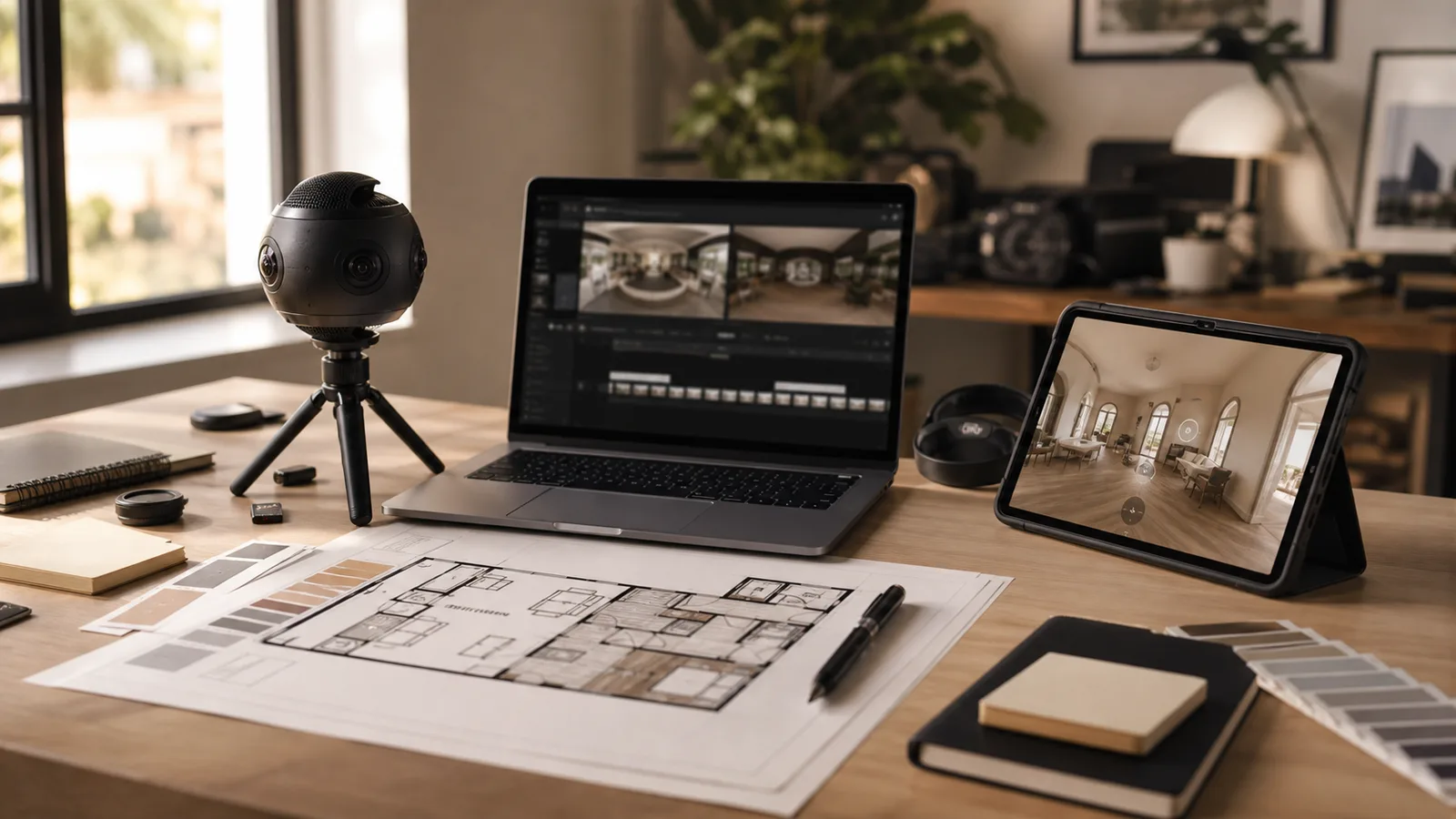
What makes a 360 tour convert better
Small UX choices can decide whether visitors explore or leave.
A clear starting point
The first scene should orient visitors quickly and make the main value of the space obvious.
Helpful hotspots
Labels, media, floor plans, and feature notes should answer questions at the exact moment they appear.
Mobile-friendly controls
Most visitors will use phones, so navigation, labels, and calls to action need generous touch targets.
Visible next action
Booking, enquiry, contact, download, or schedule links should be easy to reach without feeling pushy.
Where Xentoro fits
Xentoro Studio helps teams turn spaces into guided, web-ready 360 experiences. The work can include tour planning, scene structure, hotspot strategy, interface design, website embedding, mobile UX review, analytics planning, and future AR or VR expansion.
That is useful because many tour projects do not stop at panoramic capture. A real estate team may need lead capture. A venue may need booking flow support. A museum may need narration and education content. A campus may need maps and admissions CTAs.
The goal is to make your space easier to understand, easier to trust, and easier to act on.
FAQs about benefits of 360 virtual tours
What are the main benefits of 360 virtual tours?
The main benefits are higher trust, clearer space understanding, better-qualified enquiries, remote access, longer engagement, and reusable sales or marketing content.
Do 360 virtual tours help real estate leads?
They can help because buyers and renters can inspect layout, room flow, finishes, and space before scheduling a viewing. This often makes enquiries more informed.
Are 360 tours useful for hotels and venues?
Yes. Hotels and venues can use 360 tours to show rooms, halls, views, layouts, lobbies, and event spaces before a guest or planner books.
Can a 360 tour improve SEO?
A 360 tour can support SEO when it is placed on a crawlable page with helpful copy, headings, internal links, image alt text, fast loading, and relevant schema. The surrounding page content is important.
What should a 360 virtual tour include?
A business-focused tour can include connected panoramas, hotspots, labels, maps, narration, images, videos, lead forms, booking links, analytics, and mobile-friendly controls.
Turn your space into a guided, conversion-ready virtual tour.
Xentoro can plan the tour path, structure the hotspots, prepare the web experience, and help connect the tour to bookings, enquiries, or stakeholder presentations.